

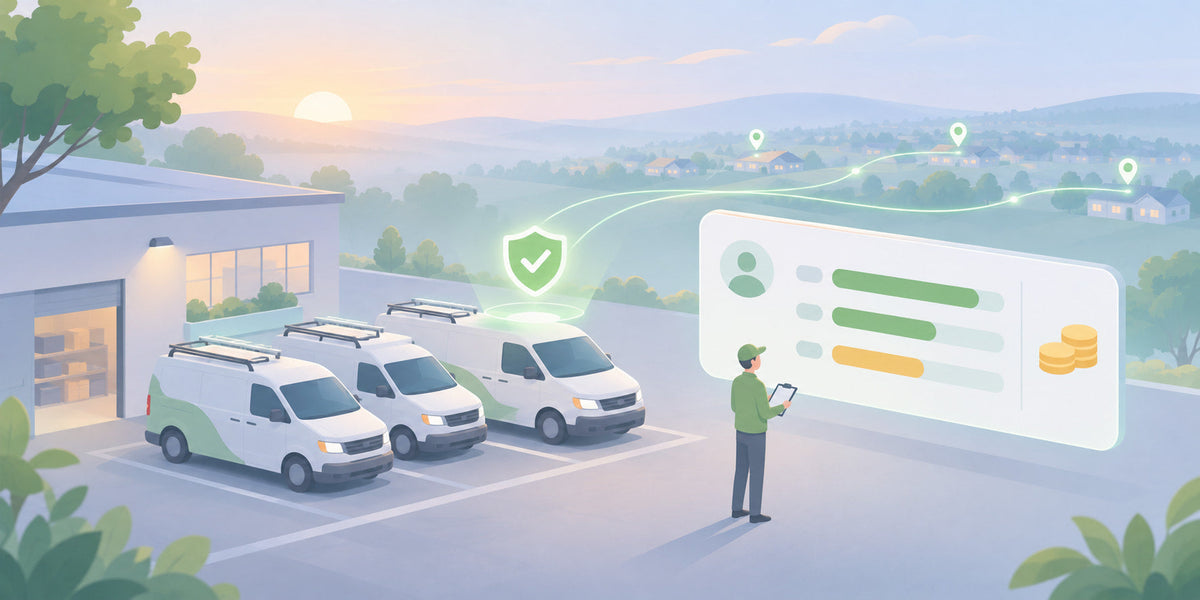
If you run a small service fleet with a tracker or an AI dash cam, you already get a driver scorecard every week. The question is what happens next. In most shops the answer is nothing: the email gets skimmed, the worst driver gets a talking-to once a quarter, and the drivers who never touch their phone behind the wheel get the same paycheck as the one who does. A safe driver bonus program fixes that by turning the score into a line on the paycheck.
This guide is for owners with 5 to 50 vehicles who want a bonus that drivers trust, that costs a predictable amount, and that holds up when someone argues with a harsh-braking alert. It covers what to measure, how much to pay, the one rule that keeps it fair, and how to pay it without creating a payroll problem in 2026.
Spytec GPS is a self-serve GPS fleet tracking platform built for small and mid-size fleets, with free hardware on every plan, no contracts, and published pricing from $8.95/vehicle/month on an annual plan.
What a safe driver bonus program is (and what it isn't)
A safe driver bonus program, sometimes called a driver safety incentive program, is a written plan that pays drivers a set amount each month or quarter when their driving data stays under thresholds you announce in advance. The data comes from the vehicle: speeding, harsh braking and acceleration from a GPS tracker, plus phone use, following distance and drowsiness if you run an AI dash cam.
It is not a contest with one winner, and it is not a surprise thank-you at the holiday party. Both of those have a place, but neither changes behavior week to week. A driver who knows exactly what earns the bonus, and can see their own numbers, drives to the number. That is the whole mechanism.
It also isn't a replacement for coaching. The bonus tells drivers what matters; a short weekly review of the worst events tells them how to fix it. If you haven't set that up yet, start with our 15-minute weekly driver coaching routine and add the bonus on top.
What to measure: four numbers, not twenty
Small fleets get into trouble by scoring everything the software can see. Drivers can't hold twenty rules in their heads, and every extra metric is another thing to argue about. Pick four, and pick the ones tied to crashes and claims.
From a GPS tracker
- Speeding events. Set one speed rule everyone understands, such as more than 10 mph over the posted limit or over a flat ceiling on the highway. The Pulse OBD tracker sends speed alerts and records the trip, so each event has a time and place.
- Harsh driving events. Harsh acceleration, braking and cornering, counted together. These are the habits a driver can change fastest, and they show up in your brake and tire bills.
From an AI dash cam
- Phone use while moving. It is a choice, not a reaction, which makes it the clearest line you can draw. The Pulse Vision AI dash cam detects phone use, eye closure and yawning on the driver side, and following too closely on the road side, with an in-cab audio alert.
- Following-distance alerts. Tailgating is a habit, and habits are what a monthly bonus changes.
Leave idling, after-hours use and long stops out of the bonus. They matter, but they are cost and policy issues, not safety ones. Handle them in your company vehicle policy so the bonus stays about driving.
Count events per 1,000 miles, not raw totals
The tech who drives 2,000 miles a month will log more events than the one who drives 400, even if they drive better. Divide each driver's events by miles driven that month (from trip history) and multiply by 1,000. Now a highway-heavy route and a short city route compete on the same scale, and nobody can earn the bonus by driving less.
If drivers share vans, score the driver, not the van
An event has to belong to a person before it can cost anyone a bonus. If your techs swap vehicles, keep a simple daily record of who drove which van: a line on the dispatch board or job schedule you already keep is enough. Score each driver only on the days you know they were behind the wheel, and use the same days for their miles. Events on a day with no recorded driver don't count for or against anyone. If two techs ride together, the driver of record is whoever drove; with a driver-facing camera, the clip shows who that was.
The data for a bonus program comes with the hardware. Pulse OBD is $8.95/vehicle/month on an annual plan, and Pulse Vision is $399.95 per camera per year. Hardware is free, there's no contract, and volume discounts of 5% to 25% apply automatically from 5 devices up.
How much should a safe driving bonus be?
Big enough that a driver notices it on the paycheck, small enough that you would pay it every month without thinking twice. A workable range for a small service fleet is $25 to $100 per driver per month. Under $25 reads as a token. Over $100 starts to feel like part of the wage, and the arguments over a single event get louder.
The cleaner structure is two tiers rather than one cliff:
| Monthly result | Example payout | Example threshold |
|---|---|---|
| Full bonus | $75 | Zero phone-use events, and harsh plus speeding events at or below your full-bonus line |
| Half bonus | $35 | Zero phone-use events, and harsh plus speeding events at or below your half-bonus line |
| No bonus | $0 | Any confirmed phone use while moving, an at-fault crash, or events above the half-bonus line |
The dollar amounts are examples to adjust. The event lines should come from your own fleet, not from a chart, because how many harsh events a van logs depends on how sensitive the alerts are. Run one baseline month without paying (see the rollout below), work out each driver's events per 1,000 miles, then put the full-bonus line where about half your drivers would have made it and the half-bonus line where about three quarters would have.
Run the cost before you announce it. At $75 a month, a 10-driver fleet pays at most $9,000 a year if every driver hits the top tier every month, which they won't. Compare that with what one at-fault claim costs you in deductible, downtime and a premium increase at renewal, and the program usually pays for itself the first time it prevents one. Safe-driving data can also help at renewal; our guide to lowering commercial auto insurance with GPS data covers what to bring your agent.
The rule that makes it fair: review the video before an event counts
This is where bonus programs fall apart. A driver loses the month's bonus to a harsh-braking alert, and the brake was the right call because someone pulled out in front of the van. Once that happens twice, drivers decide the score is random, and a random score changes nothing.
The fix is one written rule: no event counts against the bonus until someone has had the chance to look at it. With an AI dash cam that takes a minute. Pulse Vision uploads a clip automatically for each AI-detected event, and you can pull footage from any point in trip history, so the question "was that braking avoidable?" has an answer instead of an argument.
Make it work in practice:
- Give drivers a window. Any driver can flag an event within 48 hours. You review the clip and mark it counted or excused.
- Excuse by category, not by mood. Defensive braking, a pothole, a cut-off: excused. Following too closely before the brake: counted. Write the categories down so two managers would make the same call.
- Without a camera, review the map. A tracker-only fleet can still check location, speed and road for each event. It's weaker evidence, so keep tracker-only harsh events as a deduction, never as an automatic disqualifier.
If drivers are wary of a cabin camera in the first place, read what driver-facing cameras catch and whether to turn yours on, and check dash cam laws in your state before you record drivers. The bonus is a good way to introduce the camera: the footage that protects the bonus is the same footage that protects the driver after a crash that wasn't their fault.
Pay it through payroll, and mind the overtime math
Two payroll rules catch small fleets that improvise a bonus. Neither is complicated, but both are easier to get right before the first payout than to fix later. This is general information, not legal or tax advice; run your plan past your payroll provider or accountant.
A promised safety bonus counts toward overtime
Under federal wage law, a bonus you promise in advance, paid when drivers meet criteria you announced, is nondiscretionary. For hourly drivers it has to be added to their regular rate when you calculate overtime. In January 2026 the U.S. Department of Labor confirmed this in Opinion Letter FLSA2026-2, which involved drivers paid $12 an hour plus a safety and performance bonus that the employer had left out of overtime. The practical step: tell your payroll provider the bonus is nondiscretionary so it calculates the overtime adjustment for the weeks it covers.
Gift cards are taxable wages
A $50 gift card is not a tax-free perk. The IRS says cash and cash-equivalent items are never excludable as a de minimis benefit, so a gift card is wages that need withholding like any other pay. Paying the bonus as a line on the regular paycheck is simpler and puts the reward where the driver sees it. Tangible safety awards, such as a jacket or a tool, can qualify for a separate exclusion with limits, described in IRS Publication 15-B; ask your accountant before relying on it.
Write the plan on one page
A bonus drivers can't read is a bonus they can't chase. Put the whole plan on one page, hand it out, and keep a signed copy with your vehicle policy. It needs six lines:
- Who is eligible: every employee who drives a company vehicle at least X days a month.
- The period: calendar month, paid on the first payroll of the next month.
- The four metrics and how each is measured, including events per 1,000 miles.
- The thresholds and payouts for each tier.
- The review rule: 48-hour flag window, the excused categories, who decides.
- Disqualifiers: confirmed phone use while moving, an at-fault crash, or a tampered or unplugged device.
If you already have a written safety program, the bonus becomes the reward section of it. Our free fleet safety program template has the other sections, and the employee GPS tracking policy template covers the notice drivers should sign before any tracking data affects their pay.
Roll it out in 30 days
- Week 1: announce and baseline. Explain the plan, share each driver's own scorecard, and say plainly that this month doesn't pay. You're learning what normal looks like.
- Weeks 2 to 4: watch and adjust. Look at events per 1,000 miles across the team. Set the full-bonus line so roughly half your drivers would have made it. If the speed rule is producing noise, adjust the speed alert before you lock the thresholds.
- Month 2: first payout. Pay it on time, on the paycheck, with a one-line note of who earned what. Paying on schedule the first time does more for trust than any speech.
- Every quarter: tighten one line. As the team gets better, lower one threshold a little. Don't change more than one thing at a time.
For speed specifically, our guide to monitoring driver speed covers how to set alert thresholds that don't bury you in notifications.
Frequently asked questions
How much should a safe driving bonus be for a small fleet?
A workable range for a small service fleet is $25 to $100 per driver per month. Pick an amount drivers notice on the paycheck and that you can pay every month without hesitation, and use two tiers (full and half) instead of a single all-or-nothing cutoff. At $75 a month, a 10-driver fleet's maximum cost is $9,000 a year.
What should a driver safety scorecard include for a bonus?
Keep it to four metrics tied to crashes: speeding events, harsh driving events (acceleration, braking and cornering), phone use while moving, and following-distance alerts if you have an AI dash cam. Measure them per 1,000 miles so drivers with long routes aren't penalized for driving more.
Is a safe driver bonus included in overtime pay?
Usually, yes. A bonus promised in advance and paid when drivers meet announced criteria is nondiscretionary under federal wage law, so it must be included in an hourly driver's regular rate when calculating overtime. The Department of Labor confirmed this for a driver safety bonus in Opinion Letter FLSA2026-2 in January 2026. Confirm the setup with your payroll provider.
Can I pay a safe driving bonus with gift cards?
You can, but gift cards are taxable wages. The IRS treats gift cards as cash equivalents, which are never excludable as a de minimis benefit, so they need the same withholding as a cash bonus. Most small fleets find it simpler to add the bonus to the regular paycheck.
How do I keep drivers from disputing every harsh-braking alert?
Adopt one rule: no event counts until it has been reviewed. Give drivers 48 hours to flag an event, check the dash cam clip or the trip map, and mark it counted or excused using written categories such as defensive braking or a pothole. When drivers see that excused events really get excused, they have less reason to argue.
Do I need a dash cam to run a safe driver bonus program?
No. A GPS tracker alone gives you speeding and harsh driving events, which is enough to start. A dash cam adds phone use and following distance, and its video makes event reviews fast and fair, so you can tighten thresholds without more disputes.
The bottom line
A safe driver bonus works when drivers can see the score, trust the score, and see the money arrive on time. Measure four things per 1,000 miles, pay $25 to $100 a month in two tiers, review every event before it costs anyone the bonus, and pay it through payroll with the overtime math done. The data is already in your weekly scorecard; the bonus is what makes drivers read it.
Start with the trackers you'd score on. Free hardware, no contract, no sales call, and a 30-day money-back guarantee. Pulse Vision adds weekly driver safety scorecards and event video for $399.95 per camera per year.






Share:
How AI Dash Cams Work: What They Detect, What They Miss (2026)