

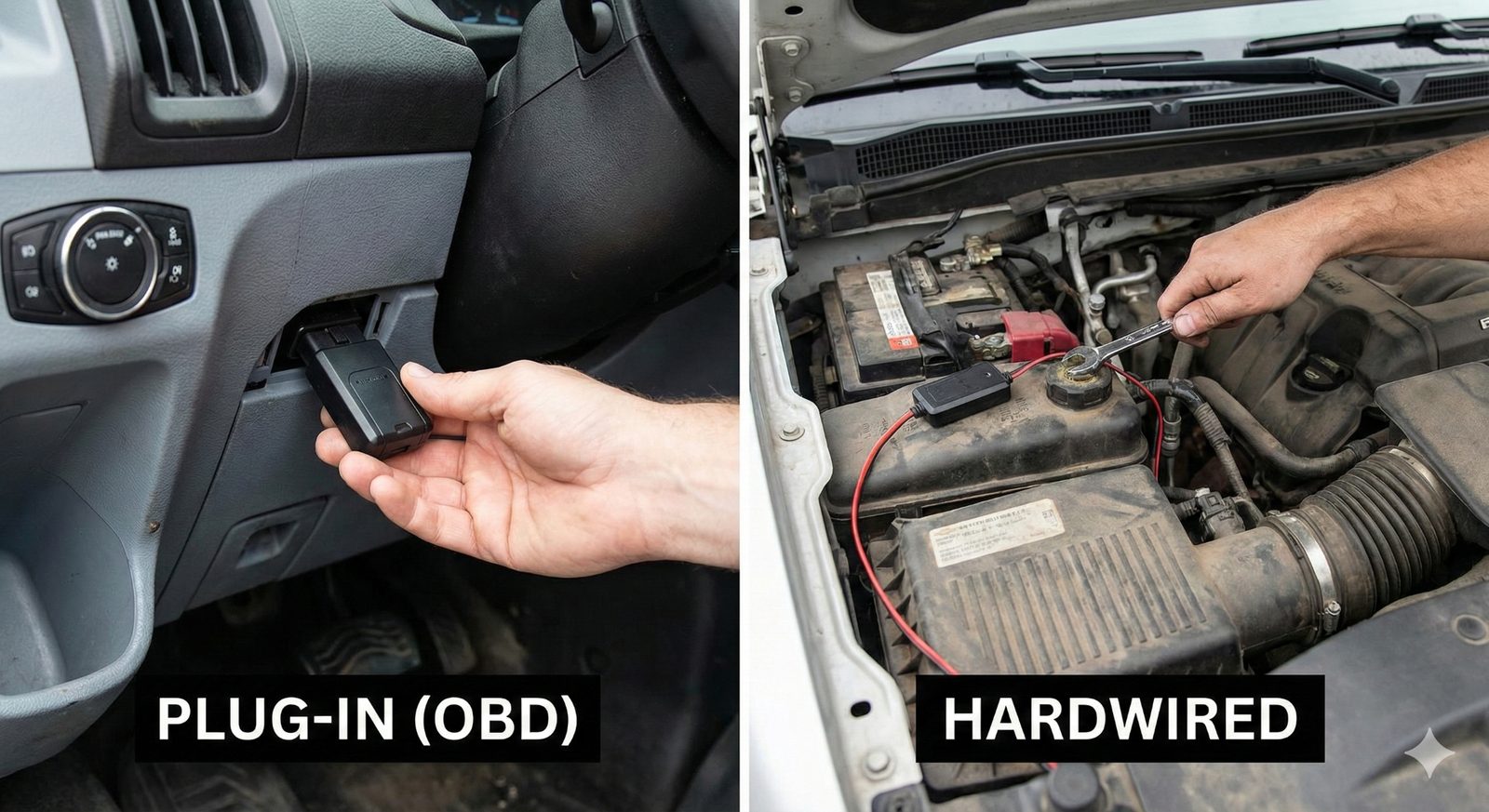
You have made the decision to track your fleet. You know it will save money on fuel and stop unauthorized side jobs. But now you are stuck on the next question: Do you choose a plug-in OBD GPS tracker or a hardwired one?
For many small business owners, this feels like a technical hurdle. You might be wondering if an OBD tracker is too easy to unplug, or if a hardwired tracker requires an expensive trip to the mechanic.
The good news is that both options utilize the same 4G cellular networks to deliver real-time location data. The difference isn't about accuracy—it’s about installation preference and visibility. In this 2026 guide, we will break down exactly how each device works so you can choose the hardware that matches your fleet's specific needs.
Looking for a broader overview that also covers dash cams, EV compatibility, and ROI? Start with our complete OBD GPS tracker guide.
Spytec GPS is a self-serve GPS tracking platform for small and mid-size fleets, offering both OBD and hardwired options with plans starting at $8.95/vehicle/month and no long-term contracts.
Option 1: The OBD GPS Tracker (Plug-and-Play)
The OBD plug-in tracker is the most popular choice for service businesses running modern vans and pickup trucks. It is designed for simplicity.
Every vehicle manufactured after 1996 is required by law to have an OBD-II (On-Board Diagnostics) port. This is the same port a mechanic plugs their computer into when your "Check Engine" light comes on. It is typically located just under the steering wheel dashboard.
Key Advantages:
- Zero Downtime Installation: You simply locate the port and plug the tracker in. It takes about 30 seconds. There are no wires to splice and no tools required.
- Vehicle Diagnostics: Because it connects to the vehicle's computer, an OBD vehicle tracker can read engine data. It can alert you to fuel levels, battery voltage, and check engine codes, helping you prevent breakdowns before they delay a job.
- Portable: If you sell a van and buy a new one, you can unplug the tracker and move it to the new vehicle instantly.
Option 2: The Hardwired GPS Tracker (Hidden & Secure)
The hardwired GPS tracker is the industry standard for tamper-resistant installs and mixed fleets. Instead of plugging into a port, this device connects directly to the vehicle's power source using two wires (red for power, black for ground).
While "hardwired" sounds intense, it is a simple 2-wire installation that most fleet owners can do themselves in 10–15 minutes. Alternatively, any local car audio shop or mechanic can install it quickly.
Key Advantages:
- Tamper-Resistant: Because the device is installed behind the dashboard, there is nothing in the cab to bump loose or unplug. This prevents tampering and keeps the dashboard area clean.
- Universal Compatibility: A wired gps tracker works on any vehicle with a 12V or 24V battery. This makes it the only choice for older vehicles (pre-1996), heavy construction equipment, and tractors that do not have standard OBD ports.
- Tamper-Proof: Since it is wired internally, a driver cannot simply reach down and unplug it to hide a detour.
Comparison: OBD vs. Hardwired
Here is a side-by-side look to help you decide which trade-offs matter for your operations.
| Feature | OBD Plug-In Tracker | Hardwired Tracker |
|---|---|---|
| Installation Time | 30 Seconds | 15–30 Minutes |
| Tools Required | None | Wire strippers (or mechanic) |
| Visibility | Visible under dash | Completely hidden |
| Compatibility | Vehicles 1996+ (Vans/Trucks) | Any 12V/24V Vehicle or Equipment |
| Diagnostics | Yes (Engine codes, fuel) | No (Location & ignition only) |
→ See fleet tracking plans starting at $8.95/mo
Choose the OBD Tracker If...
For most businesses, the OBD tracker is the path of least resistance. You should choose this option if:
- You want zero installation hassle. You want to open the box and be tracking in minutes.
- Your fleet is modern. If you run a fleet of Ford Transits or Chevy Silverados model year 2010 or newer, OBD is ideal.
- You value maintenance data. Getting an alert for a "Check Engine" light allows you to schedule repairs before a truck breaks down on the way to a customer.
- You rotate vehicles. If you lease vehicles or swap trucks often, moving the Pulse OBD tracker takes seconds.
Example: HVAC fleets often choose OBD trackers because they have high call volumes and cannot afford the downtime required to wire in devices. They can deploy trackers to 10 vans in a single morning meeting.
Choose the Hardwired Tracker If...
The hardwired option is better suited for businesses that need higher security or have specialized assets. Choose this option if:
- You need the tracker hidden. If you are worried about theft recovery or employee tampering, a hidden device is superior.
- You have a mixed fleet. If you need to track a 2024 pickup truck alongside a 2005 box truck and a skid steer, the Pulse Wired tracker is the one device that works on all of them.
- You want a permanent solution. Once installed, you never have to think about it again. It draws power directly from the vehicle battery and won't be knocked loose by a driver's knee.
Example: Landscaping companies often prefer the wired gps tracker because they need to track older dump trucks that may not have working OBD ports, or they want to ensure crews aren't tampering with the location data.
What About Battery-Powered Portable Trackers?
There is a third category: the battery-powered portable tracker. These devices do not plug into the vehicle at all.
These are generally not recommended for primary fleet vehicles because they require recharging. However, they are excellent for tracking non-powered assets like trailers, large generators, or toolboxes that sit on job sites for days at a time. If you need to track equipment that doesn't have a battery, this is your solution.
Related guides: best GPS trackers for cars | Dash Cams vs GPS Trackers — What Small Fleets Actually Need
Want Video Evidence Too? Consider Adding a Dash Cam
GPS tracking tells you where your vehicles are and how they are being driven. But if you also need video evidence for insurance claims, accident disputes, or driver coaching, consider pairing your tracker with the Pulse Vision AI Dash Cam. It combines dual 1080P cameras with built-in GPS tracking and AI-powered driver safety alerts, and it works in the same Spytec GPS platform you already use. No sales call required — order online and get free 2-day shipping.
Frequently Asked Questions
Can I use an OBD tracker on a diesel truck?
Yes. Most diesel trucks manufactured after 1996 (light and medium duty) have standard OBD-II ports. You should check under the steering column to confirm the port is present before ordering.
Will a hardwired tracker drain my battery?
No. Modern hardwired trackers are designed to draw minimal power—less than the digital clock in your dashboard. They go into "sleep mode" when the vehicle is parked to preserve your battery life.
Can employees unplug an OBD tracker?
Technically, yes, because the device is visible under the dash. However, Spytec GPS software will alert you instantly if a device is unplugged. Most fleet owners find that simply knowing the tracker is there improves driver behavior without needing to hide it.
Do I need a subscription for both?
Yes. Whether you choose OBD or hardwired, both tracker types require a subscription to transmit real-time data over cellular networks. Spytec GPS subscriptions start at $8.95/vehicle/month (annual) with no contracts.
Related reading
- Best hardwired GPS trackers for small fleets — 2026 buyer's guide.
- Hardwired GPS tracker installation guide — step by step.
Still Not Sure? Here's the Shortcut.
If your fleet is vans/trucks 2010+ and you want diagnostics → Choose OBD.
If you need a hidden install or track heavy equipment → Choose Hardwired.
Free tracker with every plan. 30-day money-back guarantee.






Share:
Dash Cams vs GPS Trackers: What Small Service Fleets Actually Need.
OBD GPS Tracker: The Complete Guide to Plug-and-Play Fleet Tracking in 2026